

Conditioning reagents are a key category of flotation reagents. They are used to modify mineral surface properties and pulp characteristics (such as liquid phase composition, frothing performance, foam properties, etc.), enhance selectivity in the flotation process, and improve overall flotation conditions. Based on their primary functions in flotation, they are classified as depressants, activators, pH modifiers, flocculants, etc.
Sodium hydroxide and sodium carbonate are important conditioning reagents.
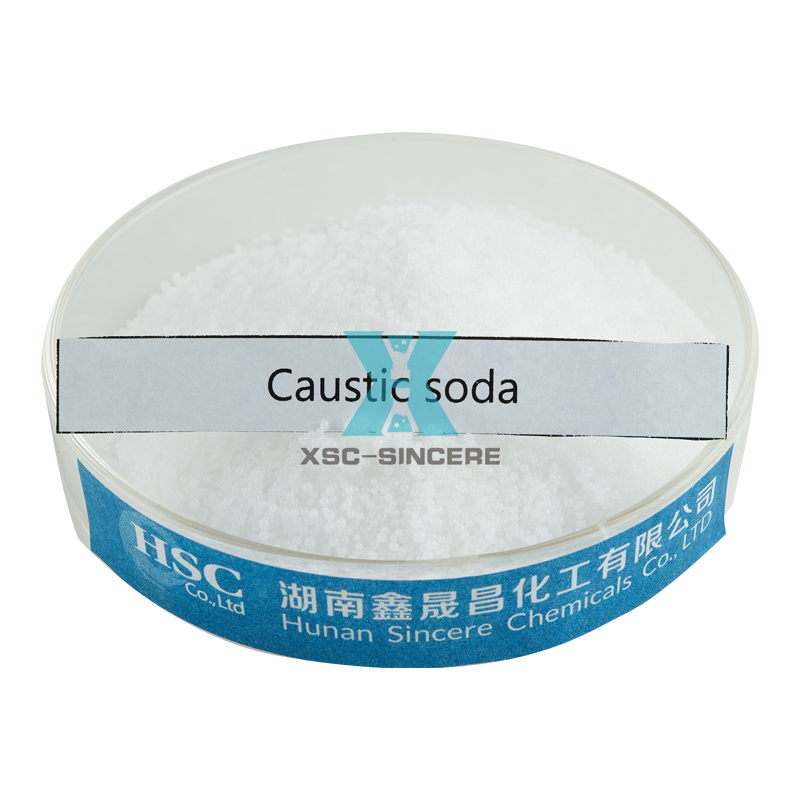
Conditioning Reagent – Sodium Hydroxide: Reaction Mechanism and Application
Sodium hydroxide serves as a strong alkaline pH modifier. It is typically used only when a highly alkaline medium is required for flotation and lime is not suitable. For instance, in the flotation of hematite and limonite using carboxylic collectors, or in the reverse flotation of quartz, sodium hydroxide is often employed to avoid the harmful effects of Ca²⁺ ions.
Conditioning Reagent – Sodium Carbonate: Reaction Mechanism and Application
Sodium carbonate (soda ash) acts as a moderately alkaline pH modifier, capable of adjusting pulp pH to 8–10 or activating pyrite that has been depressed by lime. It facilitates the precipitation of Ca²⁺, Mg²⁺, and other ions from the pulp, thereby eliminating their adverse effects. The reactions can be represented as follows:
Na₂CO₃ + 2H₂O → 2Na⁺ + 2OH⁻ + H₂CO₃
H₂CO₃ → H⁺ + HCO₃⁻ K₁ = 4.2 × 10⁻⁷
HCO₃⁻ → H⁺ + CO₃²⁻ K₂ = 4.8 × 10⁻¹¹
Ca²⁺ + CO₃²⁻ → CaCO₃↓
Mg²⁺ + CO₃²⁻ → MgCO₃↓
Sodium carbonate is primarily used as a moderately alkaline pH modifier in the flotation of non-sulfide minerals.
In the flotation separation of polymetallic sulfide ores, the use of sodium carbonate as a moderately alkaline pH modifier may lead to the formation of significant carbonate precipitates. This can cause the mineralized froth to become viscous due to entrained fine sludge, substantially reducing concentrate grades and increasing moisture content after filtration. Therefore, its use in such applications should be minimized.
Post time: Mar-30-2026


