

n the process of mineral processing, flotation is a concentration technique that separates valuable minerals from ground ore slurry based on differences in natural hydrophobicity. Following grinding and classification, the slurry is treated with various reagents, aerated, and agitated. Hydrophobic minerals attach to air bubbles and rise to the surface, while hydrophilic minerals remain in the slurry, achieving mineral enrichment.
Among the reagents used in flotation, collectors and frothers are essential, while all others are classified as modifiers. Modifiers serve to regulate the interaction between collectors and minerals, enhance or depress mineral floatability, and adjust pulp pH and ionic composition.
Activators
Activation refers to the enhancement of mineral floatability. Activators are reagents that modify the mineral surface to promote collector interaction.
Activation mechanisms generally fall into four categories:
- Spontaneous activation: Occurs when mineral surfaces interact with soluble salt ions during grinding. For example, in polymetallic ores, copper ions from oxidized chalcopyrite can activate sphalerite, complicating copper-zinc separation. Modifiers such as lime or sodium carbonate are added to precipitate these “unavoidable ions.”
- Pre-activation: Involves the deliberate addition of an activator prior to flotation. For instance, sulfuric acid is added to remove oxidized coatings from pyrite, exposing a fresh surface for flotation.
- Reactivation: Refers to the re-flotation of a previously depressed mineral, such as using copper sulfate to reactivate sphalerite that was depressed with cyanide.
- Sulfidization: Involves treating oxidized metal ores with sodium sulfide to form a sulfide film on the surface, enabling subsequent collector adsorption with xanthates.
Common activators include sulfuric acid, sulfurous acid, sodium sulfide, copper sulfate, oxalic acid, lime, sulfur dioxide, lead nitrate, sodium carbonate, sodium hydroxide, and lead or barium salts.
Depressants
Common depressants include sodium sulfide, zinc sulfate, sodium cyanide, potassium dichromate, sodium silicate, lime, yellow prussiate of soda, tannin, starch (dextrin), and carboxymethyl cellulose.
Zinc Sulfate
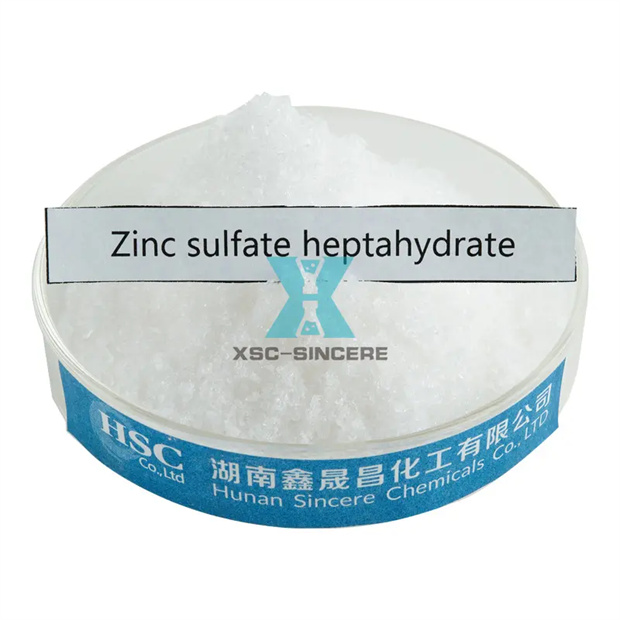
Zinc sulfate is produced by reacting zinc shavings from metal processing plants with dilute sulfuric acid. It acts as a depressant for sphalerite. While its effectiveness is limited when used alone, it exhibits strong depressing effects when combined with alkalis, sodium cyanide, or sodium sulfite. Higher pulp pH enhances its performance.
Post time: Apr-01-2026


